
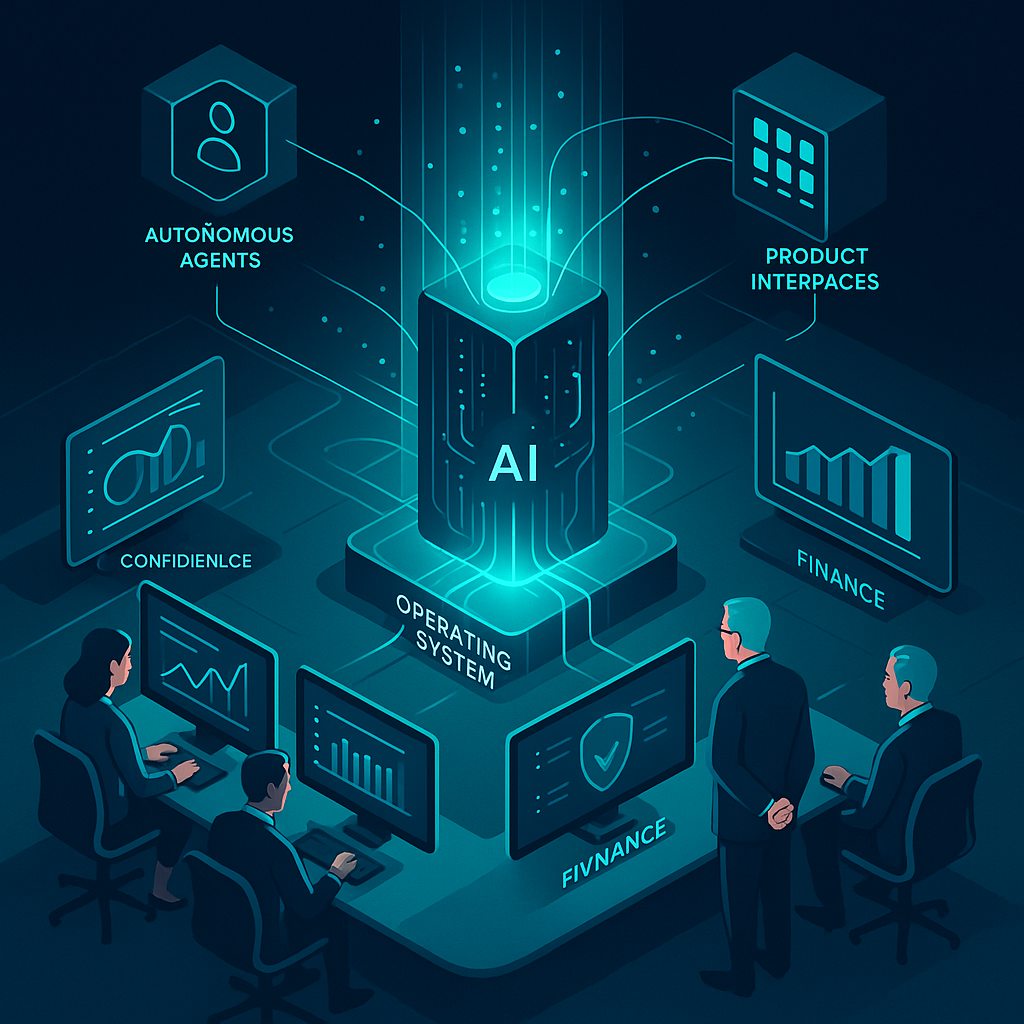
Rethinking organization, finance, and talent around intelligent automation from day one
Designing a Company with AI as the Default
Starting AI-first means designing every core choice with intelligent automation as the default. You do not treat AI as a bolt-on feature. You assume agents and continuous models will be central to decisions, workflows, and customer experiences. That changes early decisions about data, team roles, budgets, and governance. The practical difference is one of architecture versus tooling. If you wait and add AI later you inherit technical and organizational debt. Real-time pipelines, autonomous workflows, and decision gates are much harder to retrofit. In short, AI-first changes the company you will become. It shortens the path to scale and makes certain future options possible that legacy designs cannot capture.
Organizational Design for Networked AI Decision Loops and Roles
The organization moves from layered hierarchies to networked decision loops. Information flows horizontally and in real time. Autonomous agents handle structured execution and humans focus on judgment, strategy, and exceptions. Roles shift. Product leaders define outcomes and constraints instead of detailed feature lists. Engineers become system architects who ensure reliable data and safe escalation paths. Middle management thins because agents summarize and route context with fidelity. We have seen this in AI-native companies where small, elite teams drive disproportionate outcomes. That does not mean fewer people make every choice. It means you hire differently and design clear gates where human oversight is required.
Financial Model Shifts and Unit Economics in AI-First Companies
The P and L flips in predictable ways. You accept higher technology and inference spending. You plan for lower headcount costs for routine work. Gross margins may compress because inference costs are real. At the same time you free up a larger share of revenue for reinvestment. That reinvestment builds a data moat and compound improvements in product quality. The trade-off is intentional. You trade margin per transaction for better leverage per employee and faster product iteration. Over time revenue per employee can rise dramatically. This is not magic. It is a structural outcome of designing for automation and real-time learning from day one.
Hiring Strategy for Elite Talent in AI-First Firms
Hire for elite density, not headcount. You need people who can work with autonomous systems, set good objectives, and spot when human judgment must override automation. That skill set is rarer than generic execution. So hire fewer people and pay for higher capability. This amplifies the value of each person because AI multiplies the effect of high judgment and taste. Also hire complementary roles such as those who design safe escalation paths and those who steward data quality. Avoid assuming you can train juniors into these capabilities quickly. That slows you down and creates friction with agents.
Governance and Risk Practices for AI-Driven Companies from Inception
Embed proportional governance into the initial design. Decide at product conception what decisions an agent may make autonomously and which require human approval. Create clear accountability matrices so someone owns outcomes, monitoring, and override authority. Build monitoring and anomaly detection as part of the operating model so issues surface in real time. The goal is not to slow innovation but to make autonomy safe and predictable. If you postpone governance you create either dangerous blind spots or a costly retrofit. Starting small with explicit rules and escalating risk review as you scale is the pragmatic path.
Key Strategic Takeaways for Founders Starting AI-First Today
Three irreversible choices matter most. First, design data infrastructure for real-time flows from day one. Second, hire for autonomy, judgment, and the ability to work with agents rather than pure execution. Third, embed governance and escalation paths before you scale. If you follow these choices you avoid the costly debt of retrofitting. You also gain optionality to adopt better models, move into new product spaces, and scale without proportional headcount increases. In practice that means planning budgets around deliberate technology spend, accepting different unit economics, and aiming for elite talent density. The reward is a company that learns faster, moves faster, and keeps more strategic options open as the market and regulation change.
Leave a Reply